Sunday, April 15, 2012

Christ gives Victory! Meditation for the Second Sunday of Easter.

After days of distress and sorrow due to the death of their beloved teacher and friend, the disciples gather during the evening on the first day of the week behind closed doors. This night they have an encounter that changes their lives forever, giving them victory in the midst of what had, to this point, seemed to them utter darkness!
Victory over fear-!
They were gathered behind closed doors because of fear ! Truth be told, it was fear which had not not begun just this night! On multiple occasions in the gospel writings Jesus spoke to his friends about fear. There was the night when Jesus and his disciples got on a boat to cross the sea of Galilee and a storm railed against the small craft. Jesus slept quietly but his disciples were beset with fear and called out to him. There was the occasion when they saw him walk towards them on the water, and they cried out fearful that it was a spirit. The very night he was betrayed, his disciples fled out of fear! Peter the more verbal of the twelve, who had promised to never leave his master, denied knowing him three times out of fear. We can relate to that, we have all been afraid! Sometimes we fear the challenges and uncertainties of the present, other times it is the unknown future which looms threateningly, or maybe that our past will catch up with us! We fear life and death, we fear for our children and loved ones; there is so much fear in our lives! Fear clouds our judgment torments our thoughts, paints a grim picture before our very eyes so that all hope and faith is drowned out!
"The only thing we have to fear is fear it'self - nameless, unreasoning, unjustified, terror which paralyzes needed efforts to convert retreat into advance." ---- FDR - First Inaugural Address, March 4, 1933.
Fear is like a storm, like a raging sea! Yet, as we feel we will drown, Christ comes and speaks to us a word of peace. Even as he did to his disciples and their fears were stilled! As John Newton poetically writes:
“…How sweet the name of Jesus sounds In a believer's ear! It soothes his sorrows, heals his wounds, And drives away his fear…”
Where do I go with my fears? I go to the Christ! In song, prayer and worship, I bring to him the tumult of my mind, my racing heart and thoughts and, from him somehow, I receive a peace beyond my fright! I find a strength in myself I could not think was possible and discover that; He
“has not given me a spirit of fear but of love power and a sound mind”. Christ gave his disciples victory over their fears and does so in our lives also.
Victory over sin!
“Receive the Holy Spirit, if you forgive the sins of any they are forgiven!”. Who can forgive other than someone who has been forgiven? The apostles are burdened by their faults; they have missed the mark when it came to Jesus’ betrayal and passion. Christ forgives and gives them power to forgive and be forgiven! It is in forgiveness that we find victory over sin! That truth is repeated often in Scripture:
Acts 13:38 “Therefore, my friends, I want you to know that through Jesus the forgiveness of sins is proclaimed to you. Ephesians 1:7 In him we have redemption through his blood, the forgiveness of sins, in accordance with the riches of God’s grace
It is echoed in the words of St. Mathew in our common prayer…; “This is my blood of the covenant, which is poured out for many for the forgiveness of sins” We need victory over sin and the power to forgive and be forgiven at every turn in our lives. We sin when we act out of selfishness and say no to love! We sin when we act against the virtue of faith, when we demean or hurt or ignore our brother! We sin by what we do , but more often by what we choose to allow. Sin binds us but Christ sets us free. He gives us victory over the power of sin and a key to unlock its chains. The power to forgive!
Victory over Doubt!
Of course here we think of Thomas, who doubted the words of his friends concerning the resurrection of the Christ , but truth be told it speaks to each of us! Here are the sincere words of St. Matthew about the state of Jesus's friends when they first saw the risen Lord!
Matthew 28:17 "When they saw him, they worshiped him; but some doubted"
“…Doubt is natural within faith. It comes because of our human weakness and fraility. [...] Unbelief is the decicion to live your life as if there is no God. It is a deliberate decision to reject Jesus Christ and all that he stands for. But doubt is something quite different. Doubt arises within the context of faith. It is a wistful longing to be sure of the things in which we trust. But it is not and need not be a problem…”
As Augustine expressed it. The world of Christian faith is not a fairy-tale, make-believe world, question-free and problem-proof, but a world where doubt is never far from faith's shoulder! Be that as it may, doubts unanswered and ignored can affect us in our spiritual life: It kept Peter from walking on the water…It hinders us from experiencing themiraculous.
Matthew 14:31 Immediately Jesus reached out his hand and caught him. “You of little faith,” he said, “why did you doubt?”
It hinders the answer to our prayers….
Matthew 21:21 Jesus replied, “Truly I tell you, if you have faith and do not doubt, not only can you do what was done to the fig tree, but also you can say to this mountain, ‘Go, throw yourself into the sea,’ and it will be done.
James 1:6
But when you ask, you must believe and not doubt, because the one who doubts is like a wave of the sea, blown and tossed by the wind
It affects how we live out our Christian faith Romans 14:23
But whoever has doubts is condemned if they eat, because their eating is not from faith; and everything that does not come from faith is sin.
Christ came to Thomas who would not be convinced by the words of his brethren! He shows him the proof he required and received the words of homage, “My Lord and my God…”. He also comes to you and me. How did he get to each of us skeptics and overcome our many doubts? How did he overcome our unbelief? Each of us has different answers to that question! In our lives and experiences of doubt and faith we can agree that it is God alone that can truly convince a soul, persuade a mind, transform doubt into reverent faith! He did it with Thomas and the twelve, he does so with you and me! Victory is waht we need today! May we receive from Jesus the Lord victory over our fears, victory over every sin, victory over doubt and unbelief! Blessings
Seraph

Tuesday, April 3, 2012

"Release Barrabas...

These seemingly incredible words were uttered by many in the crowd gathered at the palace of the Roman governor demanding justice be done in the case of the Nazarene!

The New Testament writers say little about this man whose story is so intertwined with the events of Holy Week. John speaks of him as a bandit, using words which later Jewish historian Josephus used to describe patriots, revolutionaries opposed to the Roman government of Judea. Matthew refers to Barabbas as prisoner of some notoriety”. In the gospels of Mark and Luke we are given the added detail that he was in prison for his involvement in a riot.

Who was Barrabbas anyway….? Was he a bandit, a rabble rouser, a patriot or revolutionary seeking justice and freedom for his people? We may never have those answers but one thing seems certain, there are no easy stereotypes when it comes to Barabbas. His full name was Jesus Barabbas which literally means Son of the Father, a name by which the other Jesus identified himself with among his followers.

He is a stranger to us, but to some in the crowd he was intimately familiar. He was, as his name declares, the son of a father, he had a mother, may have had a wife, children, brothers sisters,friends as well as those who admired his cause, whichever it may have been! There were some in that multitude who probably loved him! With certainty there were some glad for the political scheming that called for the freeing of Barabbas, their family member, lover or friend!

In a world increasingly divided by political ideologies, class, race and ethnicity, this episode reminds us that people are more than the labels and stereotypes we would put them in! There are lives and particular stories behind the names and selective images flashed from our phones, computers and TV screens! Christians, Episcopalians in particular, who promise to uphold the dignity of every human being, should be careful and prayerful as we face the difficult issues that threaten to divide and alienate people from each other in our society!

“Release Barabbas”… were also words that would have been uttered by the man whose death was clamored for; the man Jesus of Nazareth. John and Matthew record the words of the Nazarene saying, “…No one takes my life from me. I give my life of my own free will…” “The Son of Man did not come to be served, but to serve, and to give his life as a ransom for many…”. Would that not have included a man who was sentenced to death , even as he?

In the release of Jesus Barabbas, Jesus the Nazarene, though innocent, dies in his stead. This idea of substitution, where the innocent freely gives his life to save the guilty, has long been at the heart of how Christians understand what happened in the cross.

Here are some of those reflections from Scripture;

“For I delivered unto you first of all that which I also received, how that Christ died for our sins…”

"But we see Jesus…that he by the grace of God should taste death for every man" (Hebrews 2:9)

“… Christ redeemed us from the curse of the law by becoming a curse for us…” (Galatians 3:13)

“… God made him who had no sin to be sin for us…” (2 Corinthians 5:21)

Our liturgies give testimony of that firmly held belief. Here are the words of the Eucharistic prayer A, 1979 BCP:

“…He stretched out his arms upon the cross and offered himself in obedience to your will a perfect sacrifice for all mankind….”

This idea called “Substitutionary Atonement” is for modern Christians hard to comprehend. There are some in Episcopal circles that decry the concept and its models, yet it seems like a simple truth that speaks to the heart! Someone has taken my place so that I may go free….! I am Barabbas, so are you! We were accused and condemned but God loved us, Jesus took our place and we were set free. St. Paul in his letter to the Colossians speaks of the list of decrees against us that was made null by Christ in the cross we are liberated, given a new chance, a new life!

Release Barrabas…I wonder how incredible those words sounded in his ears on that afternoon. He who had come to terms with certain death was let go! Wow…The unthinkable has happened and he was set free!

I wonder what he did with his newfound life and liberty? We have imagined it in all sorts of ways ! There is version where Barabbas becomes a follower of Christ , the one where he returns to the life of a revolutionary or a brigand . For the philosopher Khalil Gibran Barabbas becomes the ever tormented soul. Here are the words he puts in the mouth of the condemned man who was released;
“…THEY RELEASED ME and chose Him. Then He rose and I fell down... I was freed from my chains, and walked with the throng behind Him, but I was a living man going to my own grave…I should have fled to the desert where shame is burned out by the sun... I know now that those who slew Him in my stead achieved my endless torment. His crucifixion endured but for an hour. But I shall be crucified unto the end of my years…”
There is a choice to be made as to how we live the rest of our lives! What will we do? Have you ever felt accused, condemned by people, by your heart, your conscience? Jesus calls for your release and gives you the choice of a new life and a second chance! May we have the grace to choose well and …May the odds ever be in our favor….!

Thursday, March 15, 2012

The Last Bastion of Prejudice, the Church! Dr. Geoffey John

I have always believed that the only possible Christian model for a same-sex relationship is monogamy. I wrote a booklet about it in 1991 called ‘Permanent Faithful Stable’ which will be republished later this year. At that time I took the view that it didn’t matter whether we call it a marriage or not – what really matters is the nature of the relationship and the commitment on which it rests. In a sense that is still true. But of course the obvious, natural term for monogamy is marriage, and most people instinctively refer to civil partnerships as marriages anyway. So I think ‘marriage’ probably is the best term to use for same-sex as well as well as heterosexual monogamy, and it also has the great advantage of making clear that both should be given equal respect.

Are you willing to chart your theological journey to that point?

I start from the fact that the Church calls marriage a sacrament because the covenant of love between the married couple reflects the covenant of love between Christ and his Church, and so becomes a channel of God’s own love into the world. The secure framework of marriage helps you to keep loving through the bad times, and in the process it teaches you a deeper sort of love – the sort that involves the will and self-sacrifice and not just feelings. Growing in that sort of love means you are growing in the image and likeness of God.That is the traditional understanding of Christian marriage. But the big point is, exactly the same love and commitment are possible between two people of the same sex as between two people of different sexes, and it is not immediately clear why the Church should regard such a relationship as ethically or spiritually inferior to a heterosexual marriage. Of course the procreation of children by two same-sex partners is not possible. But the Church has never seen procreation as a necessity for marriage, and so has always married partners past the age of childbearing. Even in Genesis the first reason given why God created Eve is not childbearing but because ‘God saw that it was not good for man to be alone’. While the Prayer Book states that marriage was ordained first for ‘the procreation of children’ the modern marriage service begins by emphasising the quality of relationship between marriage partners ‘that they shall be united with one another in heart, body and mind.’So same-sex monogamy seems to me to be spiritually indistinguishable from a marriage between two people who are unable to have children together. Admitting same sex couples to marriage would extend the sacrament, not undermine it. Like the Church’s decision to admit women to the sacrament of ordination, it is a lot less revolutionary than it seems at first sight. The ordination of women has not fundamentally changed the priesthood, but has extended and enriched it. The same would be true of extending the sacrament of marriage to people of the same sex. It is not the physical gender of the people involved that matters, but the quality of their commitment and their response to the call of God. It is often assumed that scripture rules out same-sex monogamy, but that is not true unless you read scripture in a selectively literal way. In the few places where homosexuality is mentioned in the New Testament the texts show no awareness that some people are homosexual in orientation. When St Paul condemns people who ‘exchange’ heterosexual intercourse for homosexual, he is assuming that this is a perverse choice on the part of naturally heterosexual people who are simply choosing the alternative out of an excess of lust. What is being criticized in these passages is the kind of homosexual activity that was most visible in the Hellenistic society around him – promiscuity, prostitution and paedophilia. The case of two responsible, adult, homosexual Christians wishing to commit to each other in love for life is simply never envisaged.

It is also important to notice that those who choose to interpret the apparently anti-gay passages in Paul literally are usually much less literal when it comes to what Paul has to say about the place of women, or re-marriage, or slavery.

What is your opinion of the secular, political debate on the issue?

What really pleases me is that the call for same-sex marriage comes from gay people themselves. In the past gay people were often accused of being inherently promiscuous, uninterested in or incapable of permanent relationships. Civil partnerships have shown that to be the lie that it always was. The truth is that the great majority of people, gay or straight, know that their best chance of happiness and fulfilment lies in finding a partner to love and grow together with, someone who will be there at the end of the day and at the end of their life. That is not a heterosexual hope or a homosexual hope, it is just a human hope.

It is illogical to argue that same-sex marriage somehow undermines heterosexual marriage. On the contrary, it confirms the value of marriage and extends its blessings to many more people. From a purely secular viewpoint it is clearly good for the whole of the society when people commit to each other and care for one another without being reliant on the state – and this will become more important as we all live longer.

I was very struck by David Cameron’s statement that he is in favour of same-sex marriage, not in spite of being a conservative but because of being a conservative. I am not a political animal, but I want to say something very similar as a priest. I am in favour of same-sex marriage not because I am a wild liberal but because I am instinctively a traditional Anglo-Catholic. I believe in the sacrament of marriage; I believe we all need a disciplined framework for faith and love; and I believe we all need God’s grace and blessing to live by it. I think most of the 120 or so priests in the London Diocese who recently petitioned for the right to bless civil partnerships would say the same.

What do you think of what George Carey has been saying and his new Coalition 4 Marriage?

They seem to ignore the fact that the ten other countries which have already legalised same sex marriage have not experienced any of the horrors that they keep predicting. Marriage and family life in those countries have not been harmed in any way. The ‘slippery slope’ argument that same-sex marriage will somehow lead to polygamy or incest or increased debauchery is particularly illogical and rather insulting. Nor am I impressed by the argument that we should not use the law to bring about social change. If we had not made changes in the law discrimination against women, ethnic minorities and the disabled would still be firmly in place.

What message do you think the church opposition gives long term about the church and Christianity and does this worry you in any way?

It is enormously worrying. In the sixties the Church of England was in the forefront of the movement to decriminalise homosexuality. The fact that fifty years on the Church is seen as Enemy Number One of gay people is a disaster, both for our own morale and for our mission to the country. The Conservative Party realised ten years ago that the equal treatment of gay people had become a litmus test of basic human decency and changed its view; but it is a test the Church now spectacularly fails. We have become the last refuge of prejudice.

It is worse because the Church’s opposition to gay relationships is so patently unprincipled. In the Church of England we readily bless the second and even third marriages of couples who never darken our doors, yet we reject hundreds of our own faithful clergy and laypeople who long to bring their love and commitment before God and ask his blessing. While we dare to preach justice and equality in Christ’s name to the world, we seek exemptions to equality laws when it comes to our own employment and disciplinary practices. While we threaten to demote or debar American and Canadian Anglicans for appointing openly gay bishops and blessing gay unions, we are trying to appease homophobic Anglican churches in Africa which support extreme social and legal measures against homosexuals.

Not only gay people are repelled by all this. Many more people of goodwill who instinctively expect the Church to uphold justice and truth are scandalised when it so obviously does not. If secularism has gained ground in Britain in recent years, along with the demand that the Church of England must be disestablished and surrender its voice in national life, then it is our mishandling of the gay issue more than anything else that has brought it about.

Food for thought

Blessings

Seraph

Monday, February 6, 2012

When You Get in Bed With The Devil…

Roman Catholic bishops and institutions have in the last several months vocally opposed the new mandates from the administration in implementing the new healthcare law.

As currently crafted the policy would mandate Catholic universities, hospitals, and charities to provide insurance for their employees covering contraception. This, say church leaders, is a conflict pitting law against church teaching and conscience, which they see as a violation of their religious freedom.

James Carney , press secretary for the White House states the government’s position clearly; In a recent press briefing he is quoted as saying;
“The administration believes that this proposal strikes the appropriate balance between respecting religious beliefs and increasing access to important preventive services…”.
Catholic leaders in letters to be read by every priest at weekend celebrations see the mandate in a different light to be sure! It is a government intrusion into their religious liberty! Among other things the letter states;
"Never before has the government forced individuals and organizations to go out into the marketplace and buy a product that violates their conscience."
Let me be clear on this! As a Christian in a free society I do not agree that the government should dictate policies that force religious institutions to go against their deeply held beliefs! As an Episcopalian, contraception for me is a matter of personal choice, one which many Catholic women choose despite their church’s doctrinal stance. However, it is one thing to disagree with your church’s teaching on a subject matter, quite another for the government to seem to infringe on a religious institutions right to practice their faith and do business accordingly.

Many years ago, when working with a particular church community which desired to open a safe house for families in transition, the pastor and leadership of that community rejected federal grants that would have made it easier for that project to be accomplished! Even as I voiced my complete opposition to that stance, someone made clear their position with the words;
“…when you go to bed with the devil, you may wake up scorched…”.
The concern in that story was that money from the government comes with strings attached! To this small church, even though engaged in a purely social program, there was a risk of their mission being compromised or restricted by accepting funds from a government agency.

It was hard to see then, but seems a lot clearer now! I do not see the governement as the devil,but clearly there are times the imperatives of a given administration can come into conflict with the tenets of a religious community! Catholic institutions have accepted money from the government to fund part of their charitable endeavors, now there are demands placed on how they exercise their mission!

It is a sad day when a religious institution has to choose between its deeply held beliefs and its mission in order to comply with a government mandate! Hopefully the administration will relax its rules and allow religious institutions to be exempted. On the other hand, churches may need to bite the bullet and to be true to mission and faith , forgo government funds altogether. The ability they have to offer services to those in need will be limited but there will certainly be less risk of …waking up scorched!

Blessings

Seraph

Sunday, February 5, 2012

Jesus comes to Capernaum

Jesus is at Capernaum with his disciples and, when the Sabbath came, he entered the synagogue to worship.

I wonder if the synagogue was a little bit fuller that day as happens in churches where there is a guest speaker, especially one who is new and a bit controversial? Maybe some of the curious among the Jews of Capernaum, who were not frequent attended decided to come. Others may have hear Jesus teach or seen the miracles that he performed. Then again, maybe some of the usual Sabbath attendees decided to stay away that day! They had to time for the horde of newcomers nor were in the mood to listen to a carpenter turned preacher! Specially someone of such bad repute; after all it was said that he hung around the worst classes of people, tax collectors, loose women, and ill educated fishermen. For some perhaps this was just a regular day of rest. They were not too in tune with the gossip of the town, their lives were busy enough! There was little time to mind religious matters as they went about the business of living and working! They would not have noticed nor recognized the young rabbi and his followers ! Yet, on this Sabbath Jesus accompanied by his closest followers enters into the synagogue, the place of gathering, the place of worship!

How would it be for us if this was the synagogue at Capernaum that received Jesus on that morning? What kind of welcome he would find? Would he be noticed in our gatherings? Would he find a friendly face, a smile and a gesture of welcome? Would we welcome his presence?

It is said among Christians that Christ, comes to us often in guises we do not recognize, and, that as we receive and welcome a child, we welcome him! As we extend our hand of greeting to the needy, the friendless , the rejected we welcome him! It is said when we receive someone in the name of Christ that He is welcomed and that as two or three gather in his name , He is right there in the midst of them!

Are we conscious of the presence of Jesus here on this day of gathering and worship? Are we conscious of him in the faces and hearts of our brothers and sisters gathered here, are we conscious of his ever present Spirit when we, leaving all behind focus our attention on His nearness? Are we conscious of His presence as we handle his very body and blood around the Table this morning? Do we welcome that presence, that person, the person of Jesus Christ the Lord?

I would love to say that it is always the case that we welcome Christ in our midst! However, growing up in church I have seen otherwise on more than one ocassion! I remember going to a very large church, famous for its worship and miracles, and to my dismay found all seats had been reserved! As I looked around aimlessly contemplating whether I should leave, I was rescued by a kindly lady who offered me the seat at her side…alas it was another visitor, a Presbyterian come to the church for the first time! The music was wonderful; people seemed to be focused on the invisible presence of God but there was little to show they cared much about the presence of God in others! Then again, we have all been to services where it seems Jesus would not be missed at all! It is a choreographed performance from beginning to end; up and down , sign of the cross, pass the peace and don’t turn around! Like going to the symphony or maybe a pub but not as fun…. Jesus could be present but He would be utterly ignored!

Jesus comes to Capernaum on a Sabbath takes his place in the worship of the day and begins to teach! Would we welcome HIs words? I love it when it says Christ teaches with authority and contrasts him with the preachers and teachers of the day! He teaches them as one as having authority, not just knowledge….! It is interesting that the apostle Paul in the portion from Corinthians read this morning speaks about the difference between knowledge and love…;knowledge puffs up, love builds up! The Scribes and religious teachers of the day had a lot of knowledge about the requirements they saw in the law; Jesus had the authority which is given by love!

Of note is the fact that many of the places where it is said Jesus taught with authority are places in Scripture where He challenges the presuppositions of the religious culture of his day! Jesus challenged them and us to go beyond the mere acceptance of suppositions about religion, the memorizing of rules and rituals to a life united to God , a life of love to God and our fellow man! Christianity is not just about learning things, its not just about reminiscing about God, nor reading how once upon a time Jesus did his thing! It is about living in connection to that truth and allowing the very love of Christ to speak with authority into our lives and change us!

Where Christ is present, where his words are spoken, where his teaching plain things change!!!! I wonder what the reaction of the people in Capernaum’s synagogue was to the cry of the man oppressed by evil in their midst? Maybe it was a stranger or visitor, but more likely it was someone they knew! For us Episcopalians, maybe he was a respected member of the vestry of sung in the choir, led Bible study…yet he was a man afflicted! RELIGION HAS NO POWER TO EXPOSE DARKNESS, NOR DOES IT HAVE THE POWER OT FREE A SOUL, ONLY GOD CAN DO THAT! ONLY LOVE can do that….! Would we welcome His power?

There is no peace between Christ and all that would destroy people! Christ has come to destroy the works of the enemy! There are many places in Scripture that document the confrontation of Jesus with forces of evil!

* Woman who came to Christ to seek cure for her oppressed daughter!
* The man whose child was oppressed since infancy!
* Peter himself as he tried to dissuade Christ from his mission!
*Judas as he with betrayal in his heart took the bread from Jesus hands.

ST. MAKARIOS OF EGYPT

“…The devil tries to disrupt our hope in Christ and our love for Him in many ways. Inwardly he brings afflictions on the soul aided by evil spirits or he fills it with foul thoughts, or he stirs up the memory of former sins so as to make us sluggish and despair or our salvation. Or else he brings us suffering and tribulation by means of other people, but the more he does this, the more we must enkindle our hope in God…”

Jesus’ presence and words, like light in a dark place reveal and discover areas of darkness in our very souls, in our religion, in our lives; but even as we fear, wonder, despair He has the power to free us!

There are some in our postmodern societies who scoff at the idea of evil, or devils…who even as they approach the Gospel would divorce it from all what is “mystical or supernatural". Myths they say of a pre scientific era….! The poor guy at the synagogue that fateful morning was just a man with Tourettes’s syndrome, some would say! A soul caught at the wrong place at the wrong time.

I have a dear friend that wrote to me asking, why must we Christians believe in a Jesus who heals the sick who confronts the devil, who does miracles and walked on water…? How about a moral teacher come from God? My respectful answer was; sorry that is not the Jesus at the synagoge in Capernaum, it is also not the Jesus we need! I do not need another philosophy professor, nor another moral guide…! I do not need a tame , sanitized 21st century version of Jesus, whose words had to be approved by scholars! I need a guy whose words have authority and can touch me in my need!

I do not need just a friend and teacher or a role model, but a deliverer! I need a Jesus who can turn water into wine, walk on water! I need to welcome the Jesus that can face and dispel death, one that did not stay defeated in the grave…! I need the Jesus who speaks from the pages of Scripture and whose presence, words and power came to the rescue of the oppressed man in the synagogue at Capernaum!

Jesus we welcome you this day; your presence, your words spoken with authority, your power !

Tuesday, December 20, 2011

Thinking about God's Invitation...

As we gather to day in this last Sunday of Advent, sing the songs and hear the lessons from Scripture that invite us to prepare for the coming of Christ, our gospel lesson takes us to a village in Galilee where and angel makes an unexpected visit to a teenage girl by the name of Mary . There he will in the name of God ask her, call her, invite her to take part in a wonder filled plan, to advance the birth of a king and a kingdom that would have no end!

That the invitation would be issued to such a one may seem unexpected to us! Our own bishop Howard in his Advent meditation for this week says the following about God and about Mary:

"...She was young. Twelve years of age was the minimum age for marriage for Jewish girls of that time. She might not have been much older.Neither she nor her family had great stature, wealth or influence.In all likelihood, she barely knew Joseph to whom she had been promised in marriage.We first learn of Mary at a moment which must have been confusing and frightening for the young girl. It was a moment in which not only her fate, but yours and mine as well, hung in the balance. Human history itself was on the line...awaiting the response of a young girl...So it was that the good news of Jesus, of God's incarnation, began. Not with compulsion. Not with an arbitrary act on the part of God. Not with God forcing himself upon the unwilling..."
It began with an invitation from God!

Here are some simple truths about the invitation of God we can find in this blessed story...

* The Invitation of God is not to the expected

Many modern day Christians would probably feel a bit uncomfortable with God's invitation issued to a mere teenage girl! I am not sure I would be completely comfortable to entrust the fate of a newborn into the hands of any teenage unwed mother! Yet, God did not see it that way! His invitation is not related to our expectations!

You and I tend to underestimate people, we underestimate the young in particular! However, He who sees the heart of all looked into the heart of Mary and there found favor and grace! We think of David a mere teenager when, depite been passed over by his family, is annointed, chosen to be king! He is underestimated by his brothers and his very enemies mocked his youth…! God was not amused! Samuel comes to mind , a child raised in the temple, one to whom God had never been revealed but called to be a prophet of God! Jeremiah, too young , said he, I can barely talk!...yet chosen by God , invited to be part of His plan!

Whom does God invite? A simple glimpse through the Scripture leaves us amazed! A young girl of a poor family, a simple carpenter, an octogenarian woman of prayer, a bunch of fishermen, a woman of ill repute Jesus meets at a well, another possessed by the very devils, a persecutor of Christians! Certainly no one that we would expect nor have had on our short list for likely invitees to the plans of God ! And, that invitation has been issued to you and me, by someone who knows us intimately, acquainted with all our ways! We too are the unlikely…the least expected!

* The invitation of God is not to the possible!

I will never forget my mother's encouragement whenever I faced a difficult task or decision..." You do the possible, God does the impossible" I have found her advise true and helpful in many ocassions, except for the fact that often God invites to to do quite impossible things!

So it is with Mary and the angels's invitation; "now you will conceive... and bear a son! The "bear a son" part is in the realm of the possible, Mary was after all promised to be married! It’s the "you shall conceive now" which is hard to fathom! How can this be? The answer; "...for nothing shall be impossible with God!..."! God’s invitation is not to merely acomplishing the possible, WE CAN DO THAT VERY WELL ON OUR OWN THANKYOU! He calls us beyond that which we feel and know we can do, he calls us to trust him, to believe him, to follow him beyond our senses, beyond our knowledge, wisdom an experience to that which can only be done by the power of the Holy Spirit!

Isn’t that how it very often seems with God? Moses was called, one man to lead an entire people out of slavery , while armed with a speech impediment and a stick...impossible!! Noah- had no ship building skills, and was not a zoo keeper! Besides Sampson’s long hair and his good looks he did not seem have a lot more working for him, yet he was called to be a judge for Israel. Fishermen with no formal education were issued the invitation to form the basis of the kingdom of God , to carry on the good news of God’s love! Upon disccusing the impossibility for a rich man to get into heaven, Jesus looked at his stunned disciples and said, "With man this is impossible, but with God all ... Mark adds, "but not with God; for with God all things are possible!

Likewise the call of God to the Christian is to a task "impossible for the natural man". We are called beyond our pretty churches , altars , the confort of our pews and stained glass windows. We are not merely called to be Episcopalians, nor Christians, nor religious, we are called to be the "dwelling of God", the "temple of the Holy Spirit"..., the "body of Christ", "the light of the word..."! God does not call us to be goody two shoes, mere church attenders, he calls us beyond that to "new life"! To be a Christian is to live an impossible life, made possible by the very life of God lived inside you and me! Quite an impossible task for any human but for the power of the Holy Spirit!

* The invitation of God is not to the faint hearted!

Mary do not be afraid! These are words of encouragement and power! Words that encourage the hearer from timidity to expectant faith! There are so many times these words are uttered in Scripture by a heavenly messenger!

"...After this, the word of the LORD came to Abram in a vision: “Do not be afraid, Abram. I am your shield, your very great reward..".

But after he had considered this, an angel of the Lord appeared to him in a dream and said, “Joseph son of David, do not be afraid to take Mary home as your wife..."

"...Do not be afraid of those who kill the body but cannot kill the soul..."

"...So don’t be afraid; you are worth more than many sparrows..."

It can be a bit scary to hear God's call, to feel him tugging at the strings of your heart, his Spirit leading you to paths you would normally not have chosen! To follow him in commuicating good news to the needy or to a hospital room to comfort the sick or to a more intense life of prayer. We fear the loss of our priorities, our time, the disruption of our schedules and life! The confortable and timid are very hesitant to follow! Yet as Episcopalians we should very well know that to follow Christ takes "courage and singleness of heart"! We pray at every Eucharist to have the strength and valor to serve God! God does not invite us to timidity or to lives of hesitation and fear, but to be unafraid!

Mary rises to the challenge, decides to risk it all! Her plans, her wedding , her parents expectations, her very life! Her response "Here is the Lord servant, be it done unto me according to your words" leaves no doubt of her courage as she accepts the invitation of God.

May it be so with us, may we valiantly face life's challenges, may we accept the call of God in our lives, may we follow him even in the way of the cross!

Have a very blessed Christmas

Seraph

Friday, December 2, 2011

Evening Prayer


A few seconds of a beautiful and peaceful evening prayer service at St. Luke's. "...Lord you have the words of everlasting life!..."

About Those Ten Virgins…

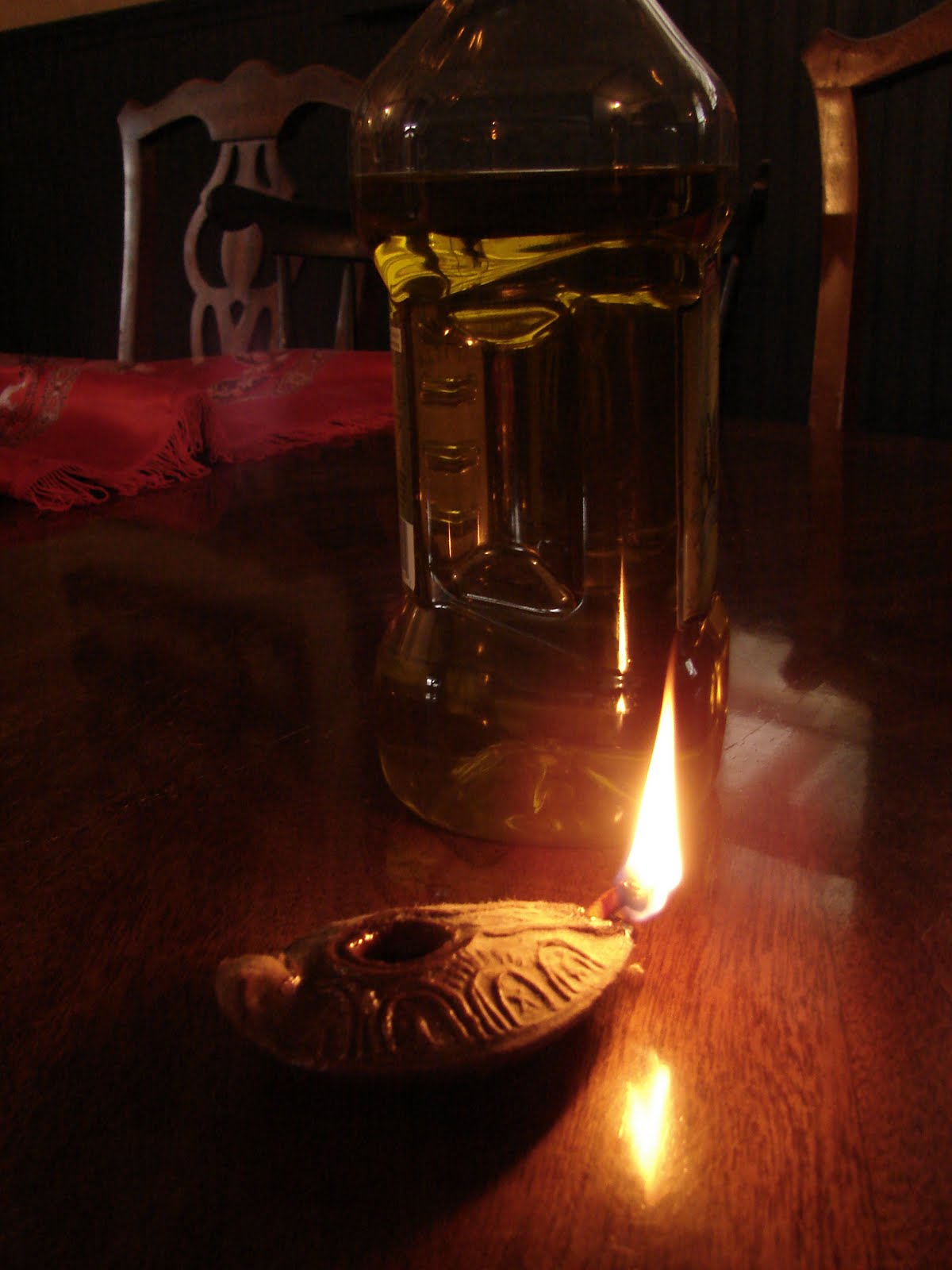
"...Then the Kingdom of Heaven will be like ten virgins, who took their lamps, and went out to meet the bridegroom. Five of them were foolish, and five were wise. Those who were foolish, when they took their lamps, took no oil with them, but the wise took oil in their vessels with their lamps. Now while the bridegroom delayed, they all slumbered and slept. But at midnight there was a cry, "Behold! The bridegroom is coming! Come out to meet him!" Then all those virgins arose, and trimmed their lamps. The foolish said to the wise, "Give us some of your oil, for our lamps are going out." But the wise answered, saying, "What if there isn't enough for us and you? You go rather to those who sell, and buy for yourselves." While they went away to buy, the bridegroom came, and those who were ready went in with him to the marriage feast, and the door was shut..." Matthew 25:1-13  

As Advent approaches it is inevitable that a reference to this parable of Jesus will show up in our liturgies, either in the gospel lesson, a hymn, some other worship song, or perhaps in the Sunday homily. For some of us raised in a strong evangelical tradition with a hint of fundamentalism there is always a bit of inner turmoil associated with this particular story.

The foolish virgins, we were told, of course, were the unprepared, did not have enough oil in their lamps! They did not pray enough, or did not have enough of the light of the word, or the oil of the Holy Spirit! They took their duty lightly and as a result missed out! They were left in the outside looking in , even as strangers! The wise ones, of course, were the well prepared; lit lamps and extra oil, and when the bridegroom came they went into the feast with him!

I cannot begin to tell you the many ways this lesson was drilled to the young in the church of my childhood, in song, lessons and fiery preaching! Reflecting back to those times, though it is true that Christians should be prayerful, filled with the Spirit and awaiting the coming of the Lord, it was the fear rather than expectancy of the Lord’s coming that made more of a mark in many of us!Today I do not read the parable with the same dread, but it does have valuable lessons for us who live in wait for the revealing, for the coming of the Lord.

I see this parable as…

A parable of the kingdom- “the kingdom of heaven is like ten virgins…”. Jesus himself speaks of the kingdom of God “among us”, not just the kingdom at the world’s end. Therefore we do not necessarily have to apply the imagery and lessons in the story exclusively to the end of the world or the second coming of Christ. Christ comes to us, in a variety of ways even now; in the gathering of two or three, in the bread and wine of the Eucharist, in the child we welcome, in the poor and needy we help, in the sick we visit; even in the hour of distress and death we have the promise of his coming, his presence. It should be no trouble for Episcopalians to see this dimension in the parable; after all, we proclaim at every Eucharist that God’s kingdom is “now and forever”.

A parable of waiting- Advent is for us a reminder that we wait, not just for a distant and rather fearful event but the imminent appearance of the bridegroom for a joyful feast. Well it seemed so in this parable, until the delay of course! The groom did not show for quite a while and the girls seemed to have lost some of their pep, got tired, perhaps bored and fell asleep. I have always thought that this could have never been a Latino wedding; no groom would be allowed to upstage the lateness of the bride and her maids! But, whatever the culture the element of delay is a key to understanding the parable’s message. Often the expected takes time, seems longer than what we want to wait, sometimes it seems like the wait is unending and we lose focus. Perhaps learning to live waiting is the hardest lesson to learn in life, specially the life in the spirit. It takes time for new life to mature, for spiritual gifts to flourish, for seeds planted to grow, for that which we expect to occur, all of which requires grace filled patience.

A parable of opportunities- Opportunities abound at every turn in this parable and sadly some were missed. Five of the virgins in our story
did not take the opportunity to prepare well. They took oil in their lamps but did not take into account that things might be delayed. The other set of five did not avail themselves of the opportunity to be charitable. They had oil and reserves, surely they could have spared even a little for their less prepared friends. There are very few places in Scriptures where this kind of selfish actions would be lauded….get some for yourselves! It certainly sheds a note of caution for people looking for solutions and answers from their friends rather from the bridegroom himself. Not all the advice we are given by those waiting with us yield the best outcomes for us! And finally, at least to me, probably the main reason some of girls were called foolish, the lost opportunity to be present when the bridegroom arrived. The story makes it clear the lamps were not yet empty of oil, they could have stayed put gone into the feast and shone at least for a while. They could have pleaded with the bridegroom, apologized to the bride, maybe bribed the mothers in law and who knows what else. As it was, they left and did not make it back before the doors were already closed and the feast begun! Be present, even if unprepared, do not miss the opportunity for mercy and for grace which these girls unfortunately let pass.

A parable about us- Sometimes we are very much the prepared virgins, ready for come what may! To be of service to someone in need, to deliver that word of prophecy or hope, to evangelize at the drop of a hat. Other times we are less so! We are tired, down, distracted , sleepy, we miscalculated the moment or the wait, we just cannot find the enthusiasm or the words! This parable gives us a lot to reflect about in our own lives of faith.

So there you have it…its about the kingdom of God here and now, about graciously and patiently waiting, about opportunities we should not let pass by and finally about you and me!

Have a Blessed Advent

Seraph